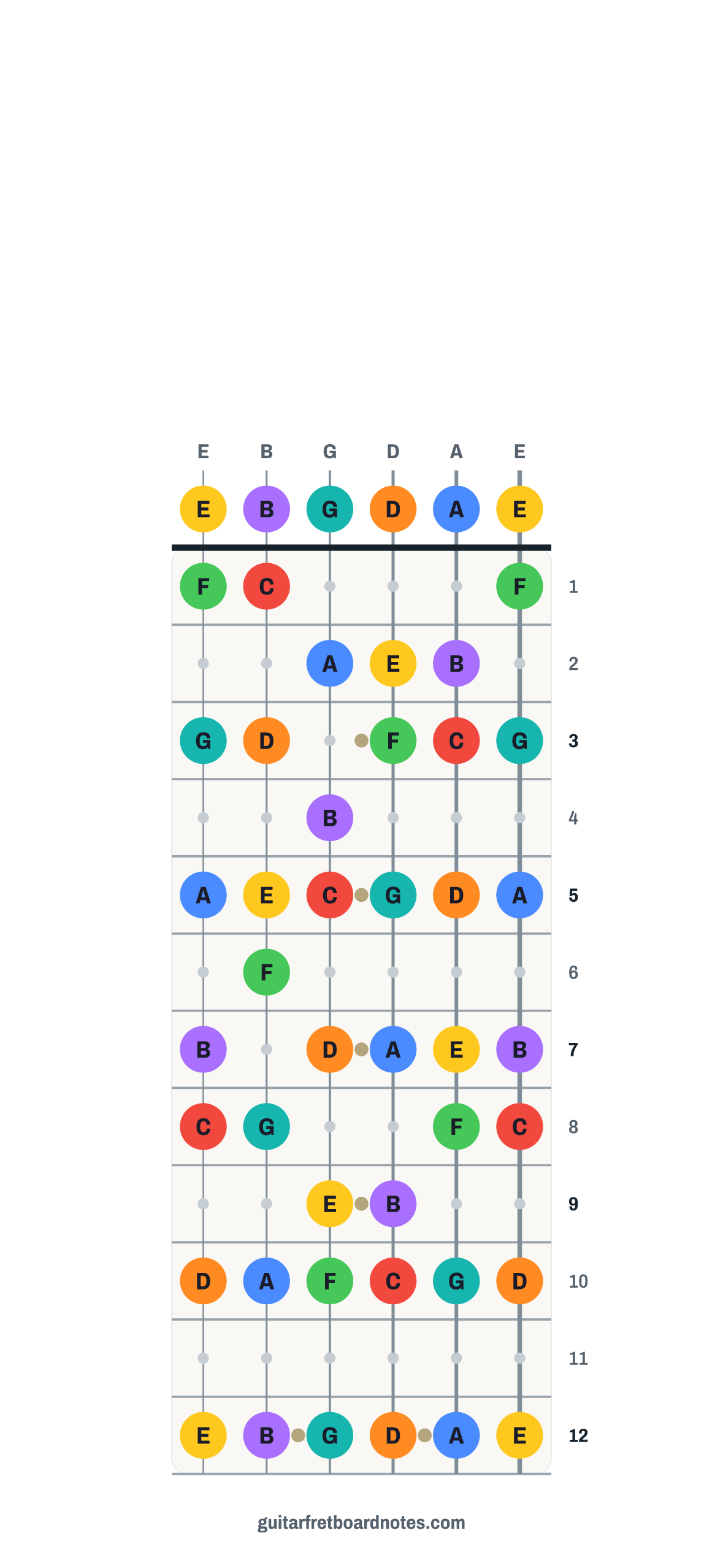
More sheets
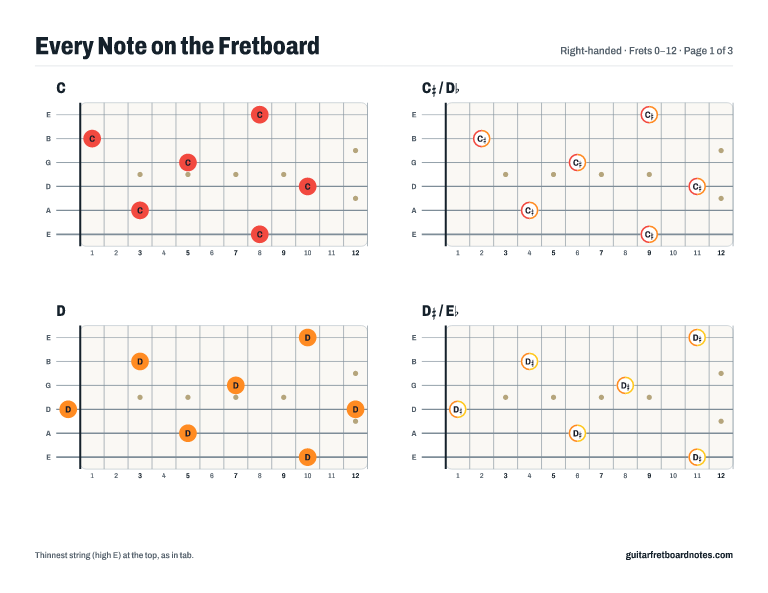
Every note, one at a time
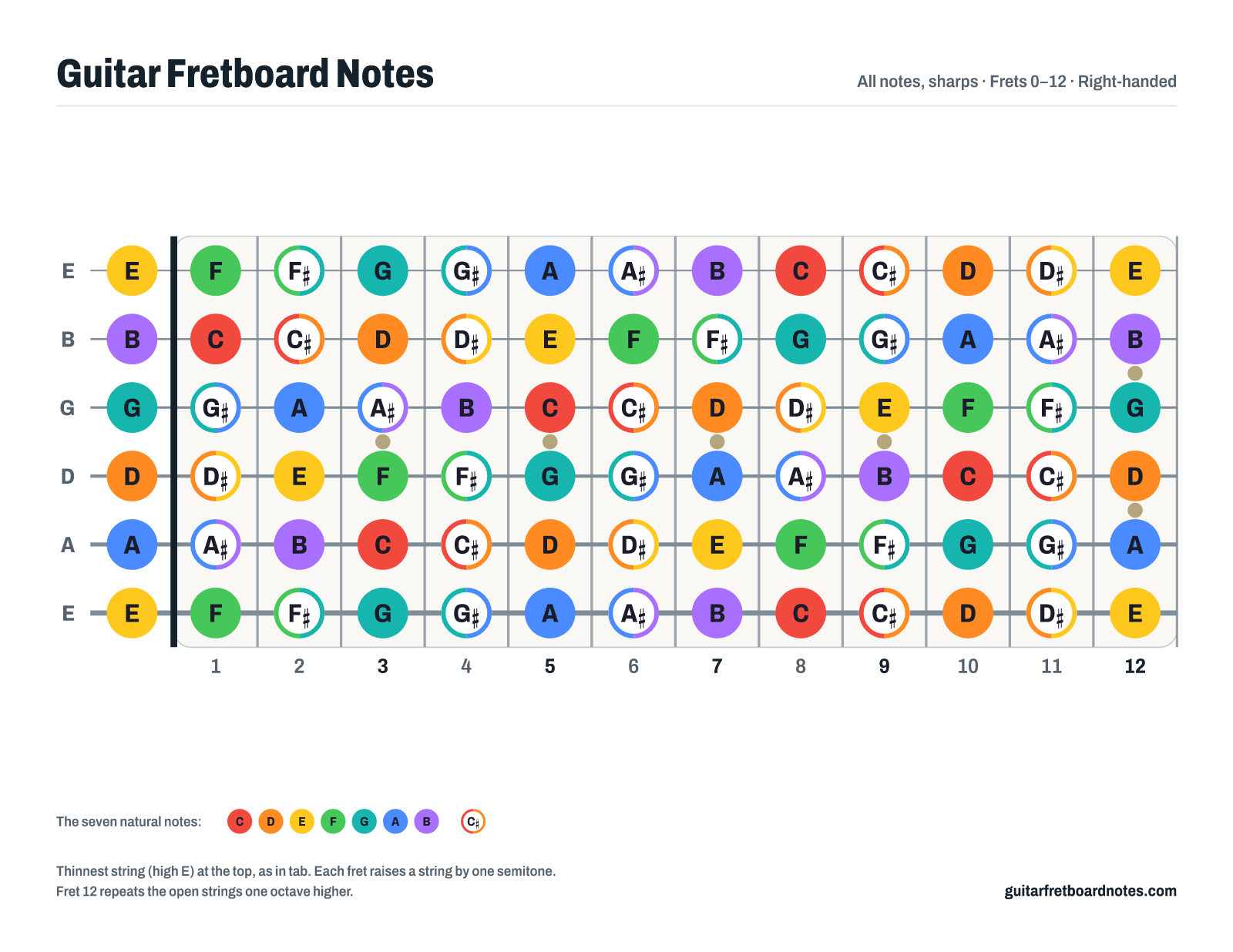
Twelve small charts, one per note, each showing every place that note is played up to fret 12. Three pages.
Right-handed: Color, US Letter Color, A4 Black and white, US Letter Black and white, A4
Left-handed: Color, US Letter Color, A4 Black and white, US Letter Black and white, A4
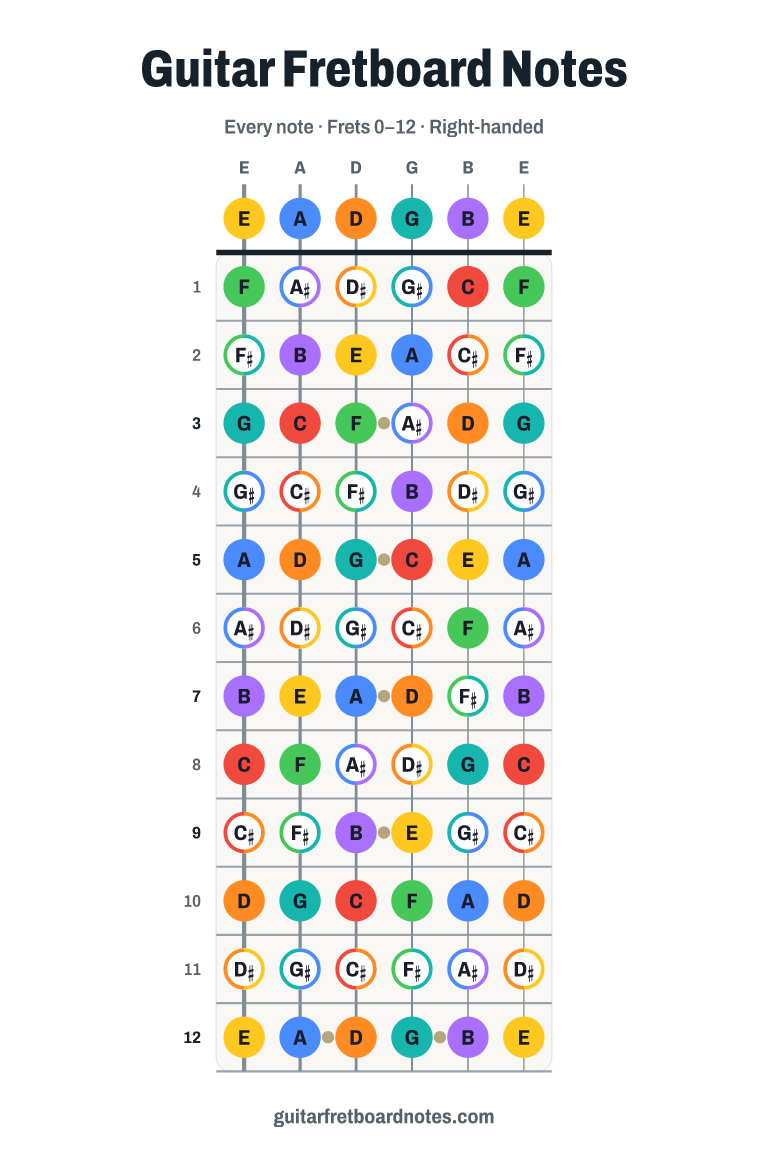
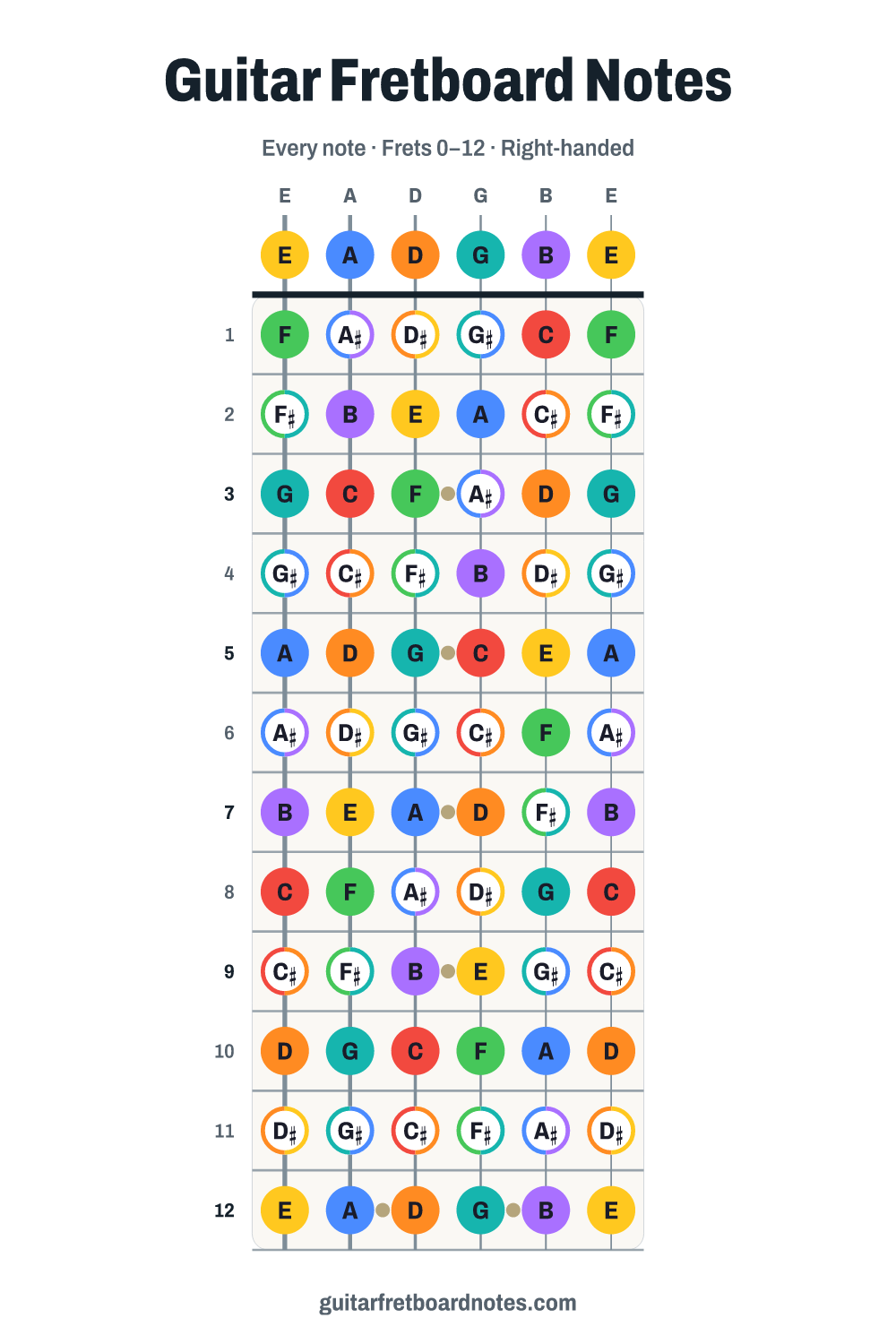
Tall chart
An upright neck with the nut at the top, in a 2:3 shape that fits a phone screen or a print on the wall.
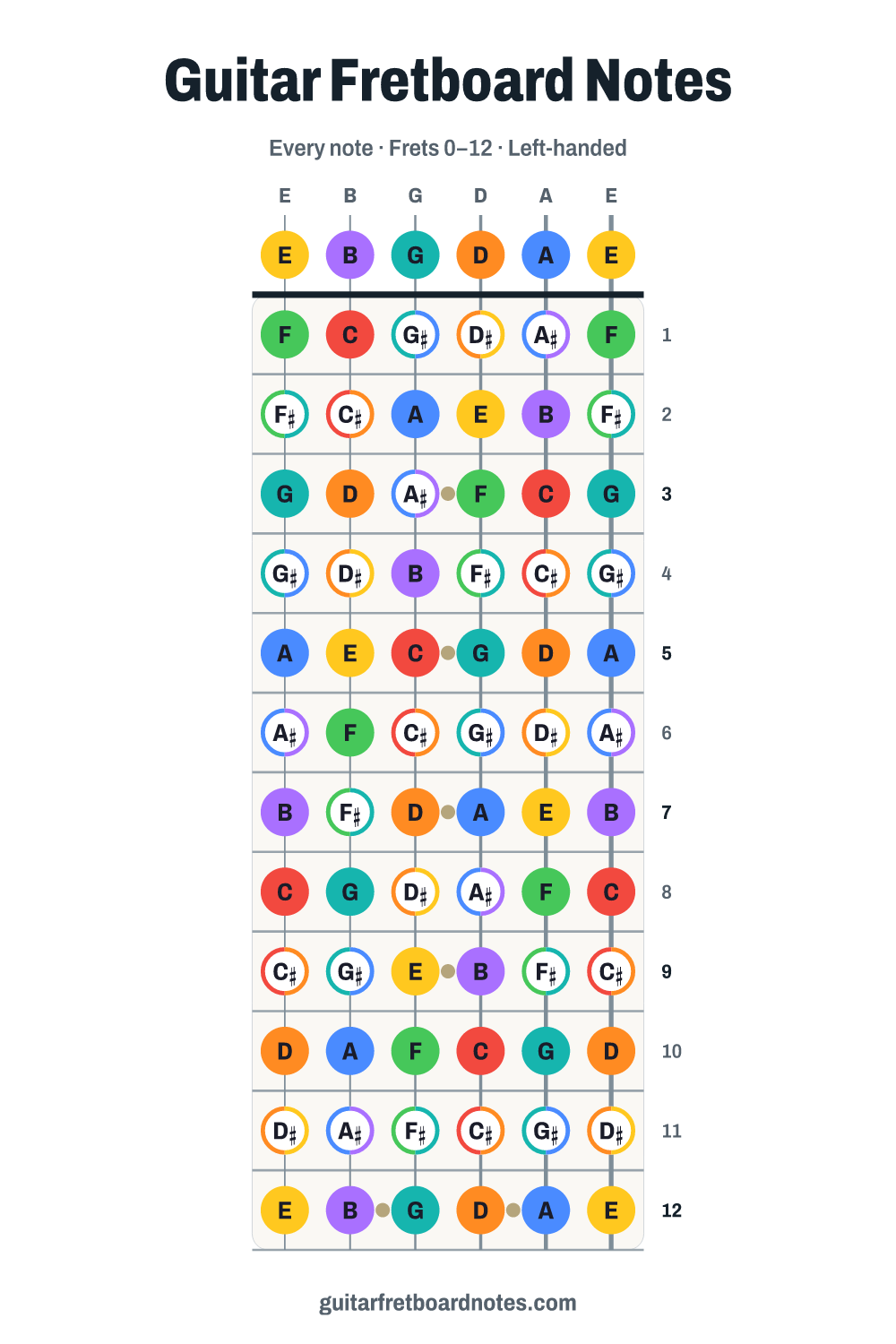
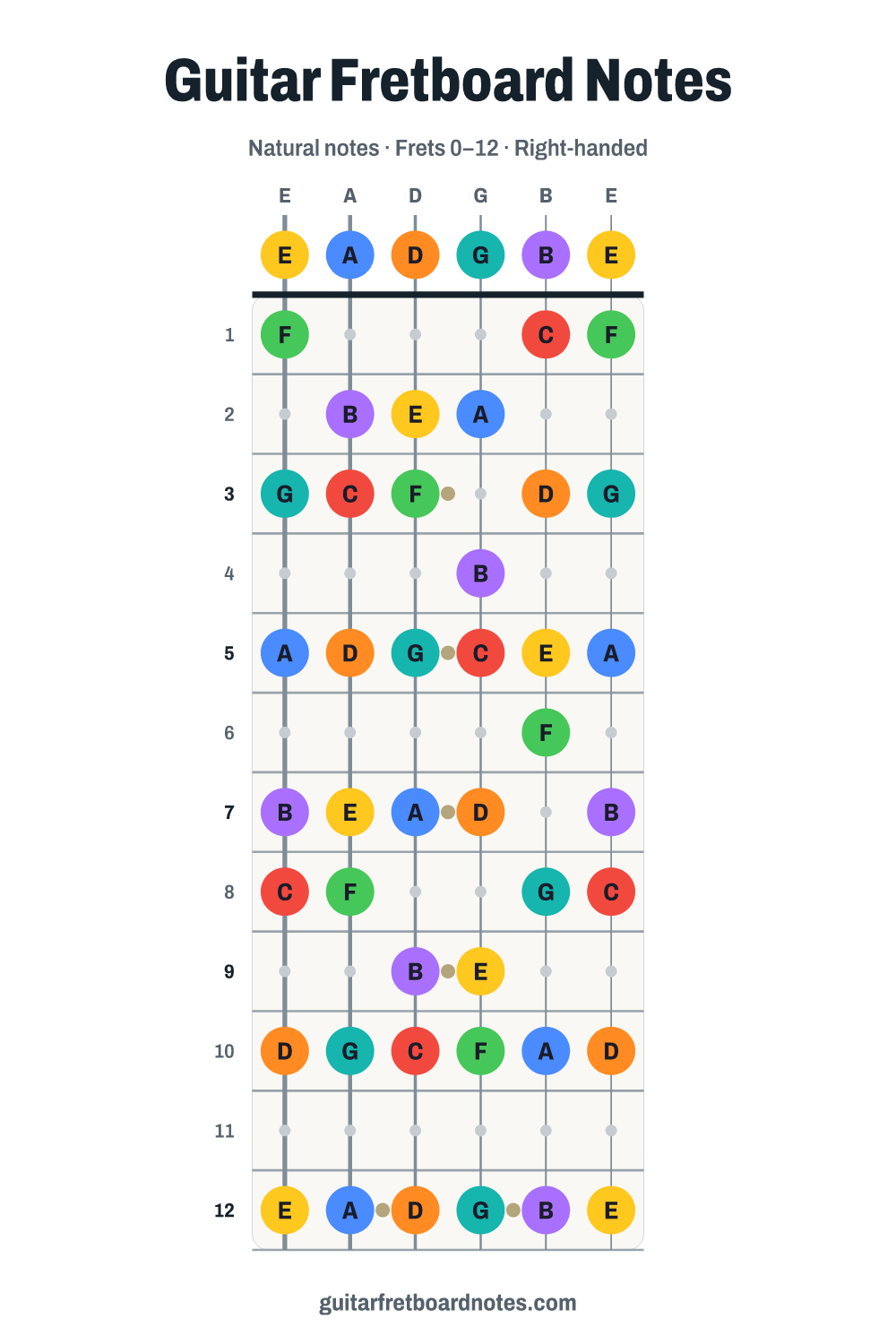
Every note, right-handed Every note, left-handed Natural notes, right-handed Natural notes, left-handed
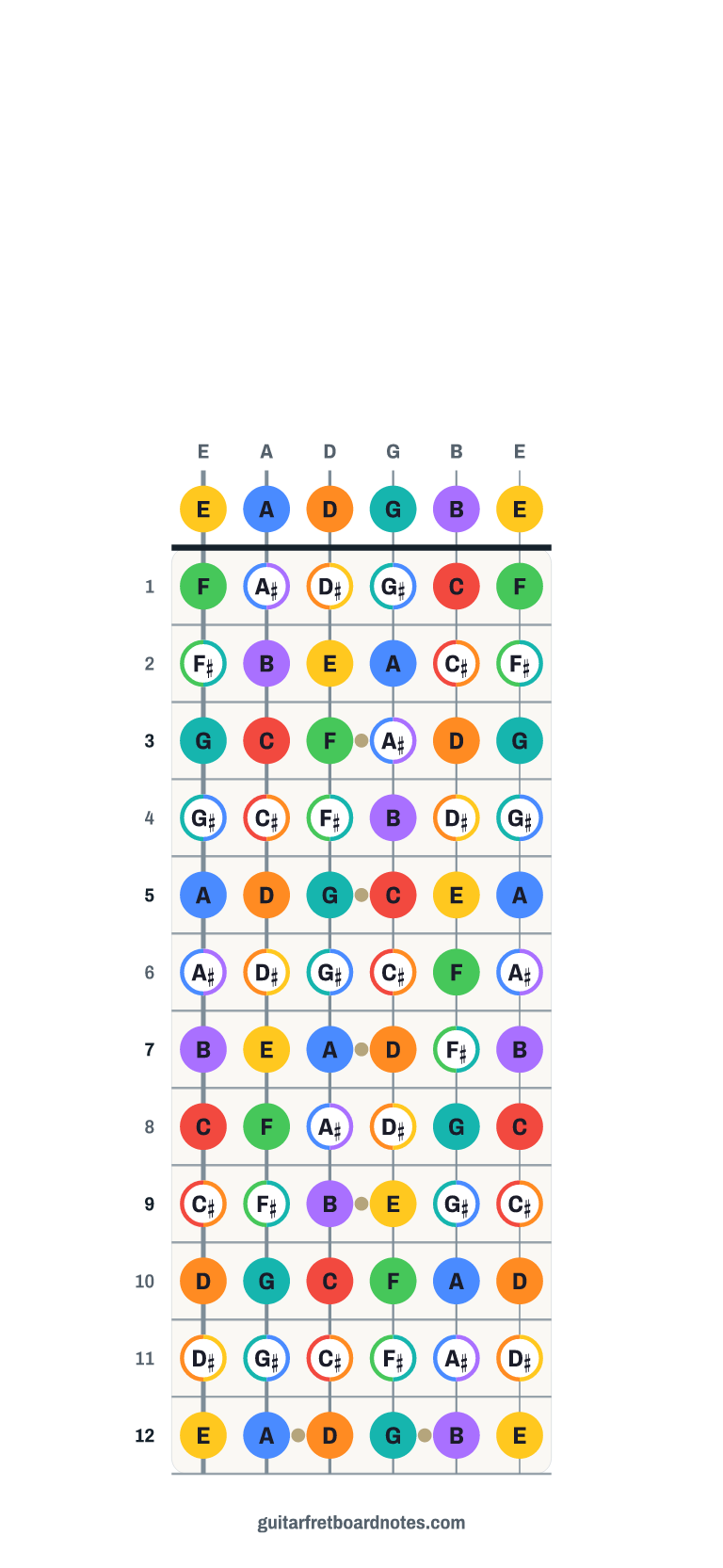
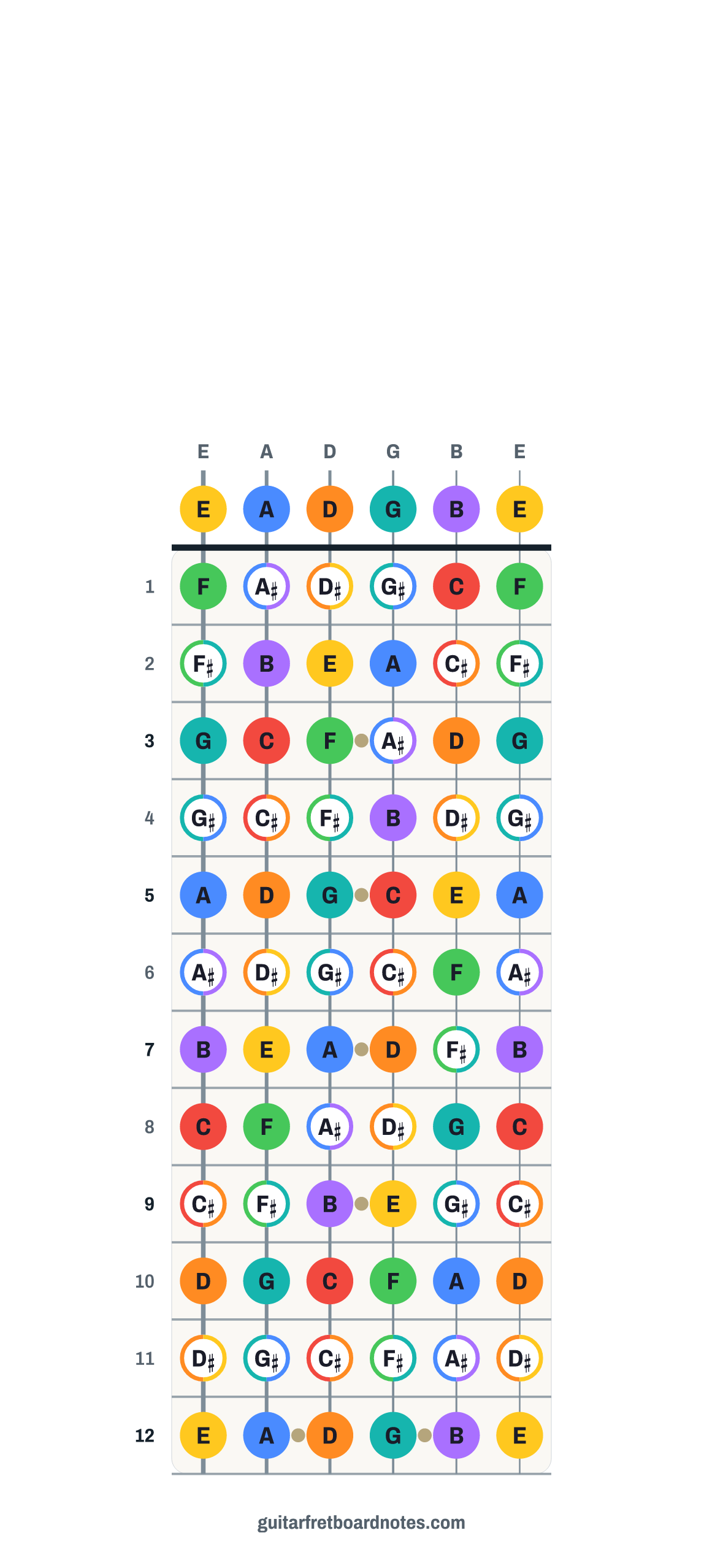
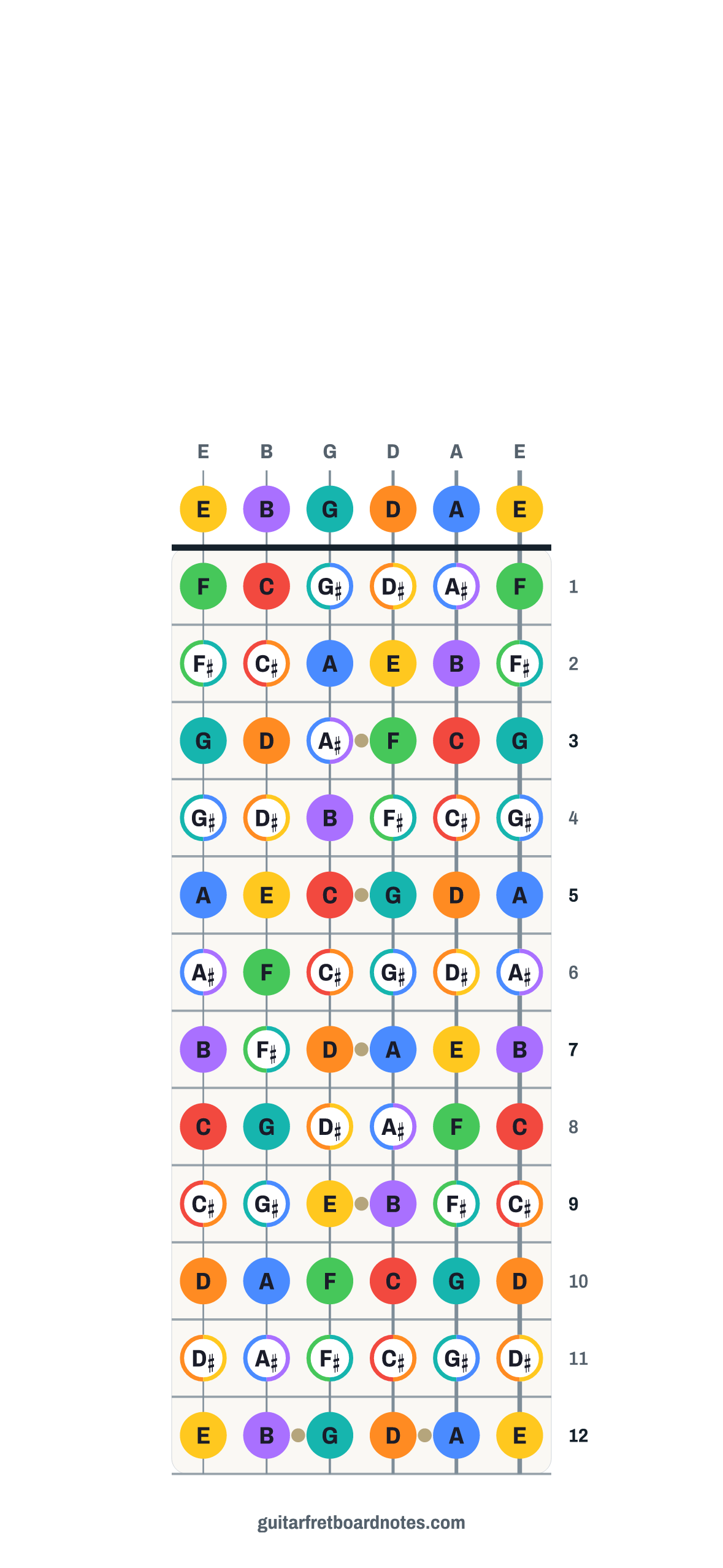
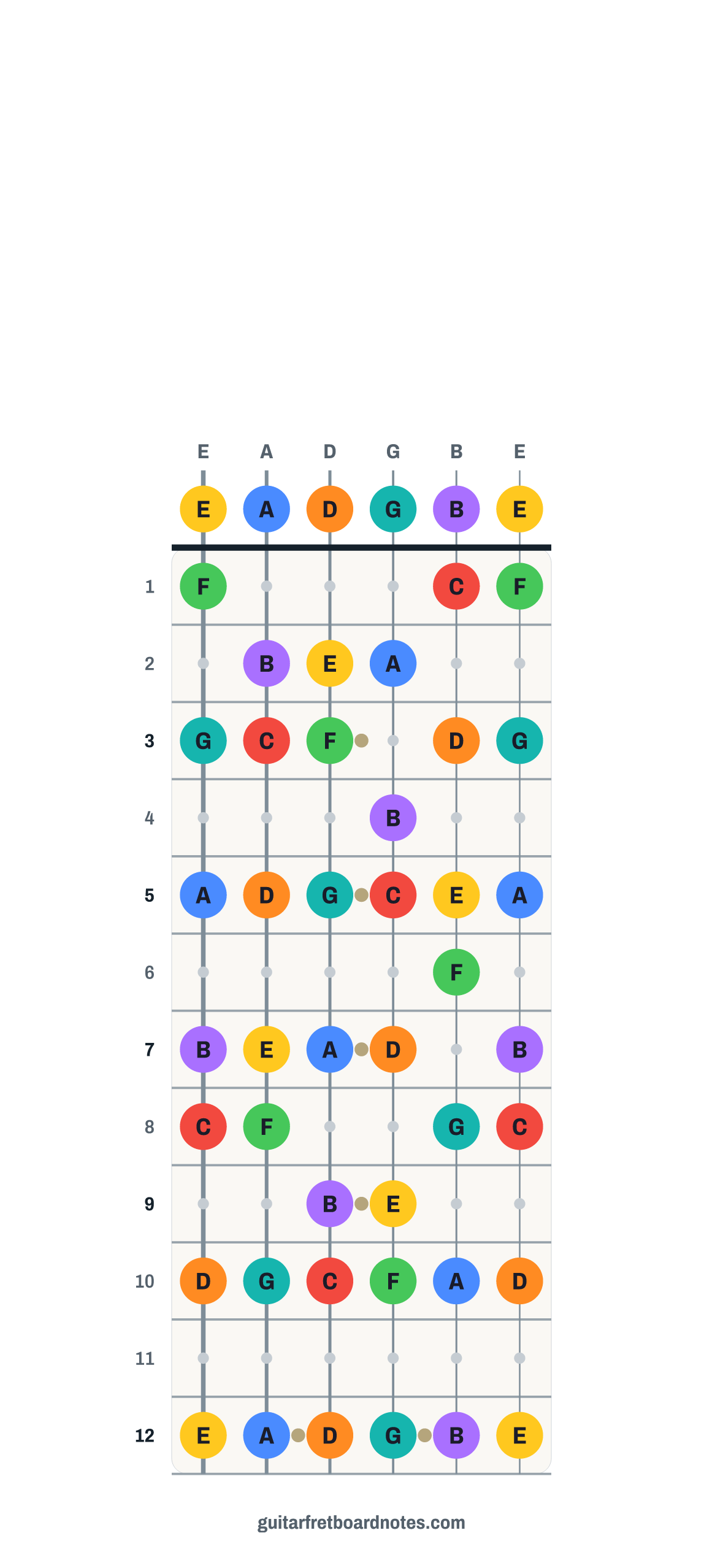
Phone wallpaper
The neck sized for a phone lock screen, with room at the top for the clock.
Every note, right-handed Every note, left-handed Natural notes, right-handed Natural notes, left-handed
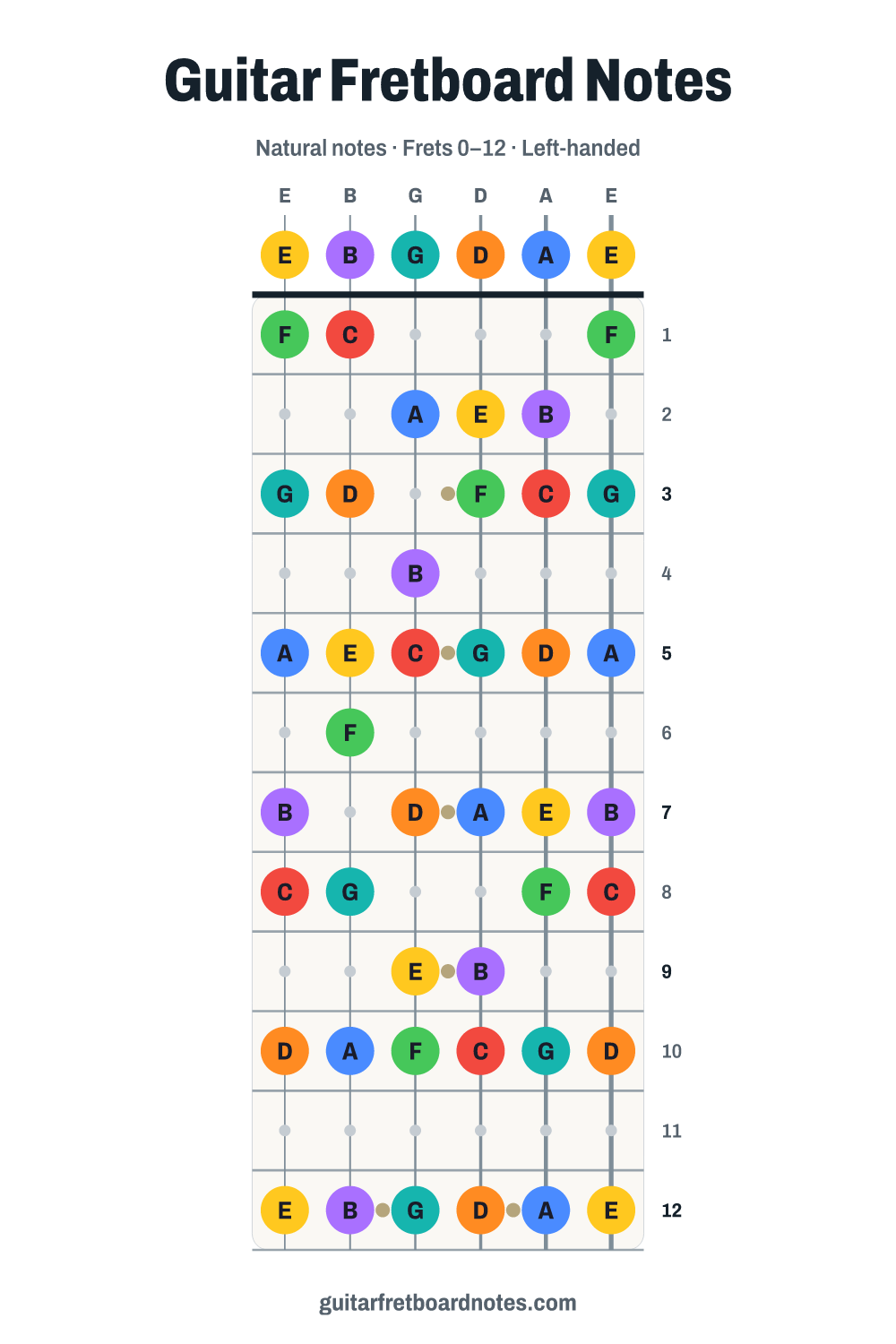
Left-handed guitar notes chart
Every chart on this page has a left-handed version. The neck is mirrored, with the nut on the right, so it matches
a left-handed guitar's fretboard. String order stays the same: the thin high E is at the top.
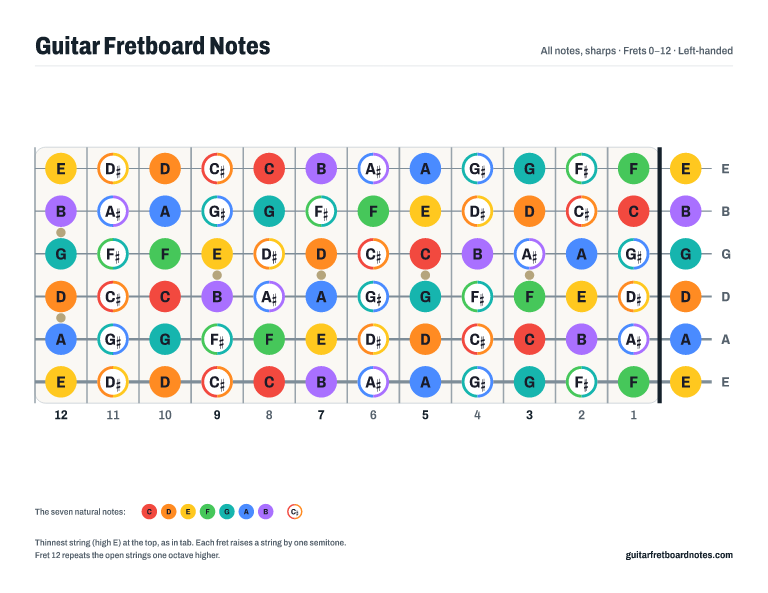
All notes, sharps (PDF)
All notes, flats (PDF)
Natural notes only (PDF)
For 24 frets, black and white or A4, choose Left-handed in the picker at the top.
How to read the guitar fretboard chart
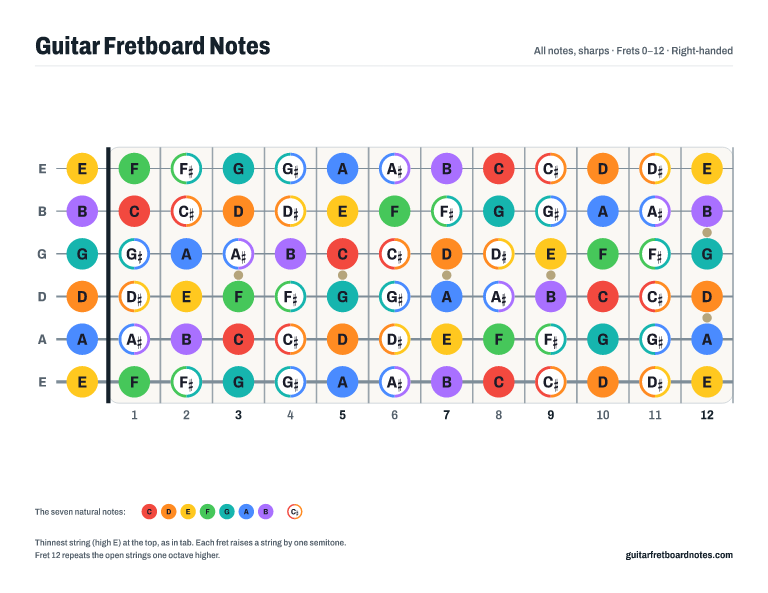
Each guitar fretboard notes PDF is a neck notes chart: the guitar neck drawn flat, with the name of the note
on every string at every fret.
-
The strings run across the page, thinnest (the high E) at the top, the way tab draws them. The
guitar string notes page explains the order.
- The column left of the thick nut line is the open strings. Fret numbers run along the bottom; the dots at 3, 5, 7, 9 and 12 match the markers on most guitars.
- Each fret raises a note by one semitone. Most natural notes have a sharp or flat between them; E–F and B–C do not.
- At fret 12 the notes start again, one octave higher. That is why the second row of the 24-fret chart matches the first.
To test yourself without the chart, try a guitar notes quiz.
Which chart should I print?
- Natural notes only: the seven notes without sharps and flats, which mark their places as small dots. The least crowded chart.
- Sharps or flats: the same notes under two names; C♯ and D♭ are the same fret. Choose the spelling your songs or teacher use.
- 12 or 24 frets: 12 frets already shows every note. Print 24 if you play high up the neck.
- Black and white: saves color ink; sharps and flats are grey.
- Letter or A4: Letter for the US and Canada, A4 almost everywhere else.